
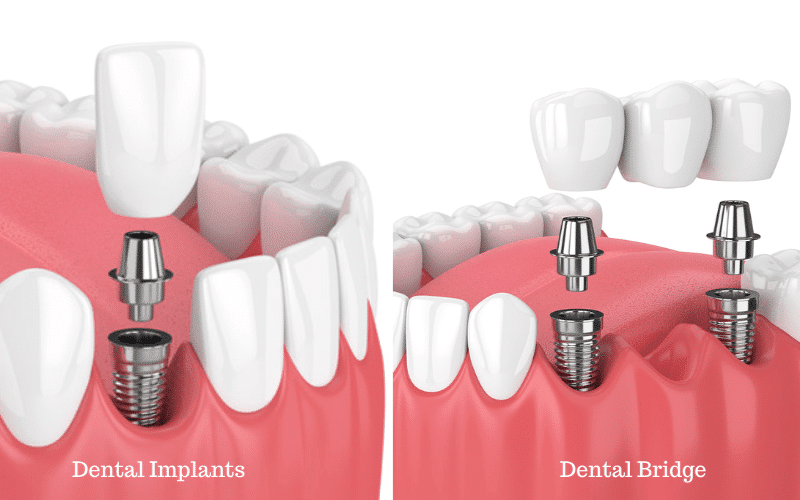
Dental implants and dental bridges are two common solutions for replacing missing teeth. While implants involve surgically inserting artificial tooth roots into the jawbone, bridges use adjacent teeth for support. The significance of replacing missing teeth extends beyond aesthetics to include functionality and overall oral health.
This blog compares dental implants and bridges, exploring their procedures, benefits, and considerations. By understanding the differences between these options, readers can make informed decisions about their dental care to achieve optimal oral health and quality of life.
Understanding Dental Implants
Dental implants are prosthetic tooth roots surgically implanted into the jawbone, serving as stable anchors for artificial teeth. This process involves several steps, including initial assessment, implant placement, osseointegration, and attachment of custom-made crowns or bridges.
Dental implants offer numerous advantages, including durability, natural appearance, and preservation of jawbone health. However, they require sufficient bone density and healing time. Overall, dental implants provide:
- A long-term solution for replacing missing teeth.
- Restoring functionality.
- Enhancing confidence in one’s smile.
Pros and Cons of Dental Implants.
Pros of Dental Implants:
1. Longevity: Dental implants are a permanent solution for missing teeth and, with proper care, can last a lifetime.
2. Natural Appearance: Implants look and feel like natural teeth, providing a seamless and aesthetically pleasing smile.
3. Improved Oral Health: Implants help preserve jawbone density and prevent bone loss, maintaining oral health and facial structure.
4. Enhanced Functionality: Unlike removable dentures, implants function like natural teeth, allowing for comfortable chewing, speaking, and smiling.
5. Convenience: Dental implants eliminate the need for messy adhesives and special cleaning procedures associated with traditional dentures.
Cons of Dental Implants:
1. Cost: Dental implants can be expensive, especially when multiple implants or additional bone grafting are required.
2. Surgical Procedure: Implant placement involves oral surgery, which carries risks such as infection, nerve damage, or sinus issues.
3. Time-consuming Process: The dental implant process can take several months to complete, including healing and osseointegration.
4. Requirement of Adequate Bone Density: Patients must have sufficient jawbone density to support dental implants, and those with bone loss may require additional procedures like bone grafting.
5. Not Suitable for Everyone: Certain medical conditions, such as uncontrolled diabetes or active gum disease, may disqualify individuals from receiving dental implants.
What are Dental Bridges?
Dental bridges are fixed prosthetic devices that replace one or more missing teeth by spanning the gap between adjacent teeth. Consisting of artificial teeth called pontics, bridges are anchored in place by crowns placed on the natural teeth on either side of the gap. This restoration not only restores the appearance of a complete smile but also improves chewing and speaking functionality.
Dental bridges come in various types, including traditional bridges supported by natural teeth and implant-supported bridges anchored to dental implants. They offer a non-removable solution for replacing missing teeth and enhancing oral health and aesthetics.
Pros and Cons of Dental Bridges
Pros of Dental Bridges:
1. Aesthetic Improvement: Dental bridges restore the appearance of a complete smile, enhancing facial aesthetics and boosting confidence.
2. Improved Chewing Functionality: Bridges restore proper biting and chewing ability, making eating a wider variety of foods easier.
3. Non-Surgical Procedure: Unlike dental implants, bridges typically do not require surgery for placement, making them a less invasive option for some patients.
4. Cost-Effective: Dental bridges are generally more affordable than dental implants, making them a viable option for patients with budget constraints.
5. Faster Treatment Time: Getting dental bridges is often quicker than dental implants, requiring fewer appointments.
Cons of Dental Bridges:
1. Impact on Adjacent Teeth: Traditional bridges require the preparation of adjacent teeth to support the bridge, potentially compromising their structure.
2. Greater Risk of Decay: Bridges can make it more challenging to clean between teeth, increasing the risk of decay and gum disease in the long term.
3. Potential for Discomfort: Some patients may experience discomfort or sensitivity initially after getting a bridge, particularly if adjustments are needed.
4. Limited Lifespan: While dental bridges are durable, they may need to be replaced after 5 to 15 years, depending on oral care and usage.
5. Dependency on Natural Teeth: Bridges rely on the support of adjacent natural teeth, which may weaken over time and compromise the bridge’s integrity.
Which one should you choose: Dental bridges or implants?
Various factors, including oral health, finances, and personal preferences, influence the choice between dental bridges and implants. Dental implants offer a permanent and durable solution, preserving jawbone health and providing a natural appearance, but they require surgery and a higher upfront cost.
On the other hand, dental bridges are a more affordable and quicker option, albeit with potential drawbacks like impacting adjacent teeth and a limited lifespan. Consulting with a dentist is essential to assess individual needs and determine the most suitable option for restoring missing teeth, ensuring long-term oral health and satisfaction with the chosen treatment.
Factors Influencing the Decision:
1. Oral Health: The condition of the surrounding teeth and gums and overall oral health will influence the suitability of dental implants or bridges.
2. Bone Density: Sufficient jawbone density is necessary for dental implants, and individuals with significant bone loss may require bone grafting before implant placement.
3. Budget: Dental implants typically have a higher upfront cost than bridges, so financial considerations may play a significant role in decision-making.
4. Timeframe: Dental implants involve a longer treatment process, including healing and osseointegration, whereas bridges can be completed more quickly, making them a preferred choice for some patients with time constraints.
5. Preference for Permanent or Removable Solution: Some individuals may prefer the permanent and non-removable nature of dental implants, while others may prefer the convenience of removable bridges or factors such as comfort and ease of maintenance.
Wrap Up!
In conclusion, weighing various factors like oral health, budget, and personal preferences is crucial when considering dental implants or bridges. Consulting with professionals, such as the experts at Implant Dentistry In Whitehall, associated with the trusted brand Lake Shore Family Dental Care, is essential for making an informed decision.
With their guidance, you can choose the option that best suits your needs, ensuring long-term oral health and satisfaction. Don’t wait any longer to restore your smile! Schedule a consultation today and take the first step towards a confident and healthy smile.