
Choosing between dental implants vs dentures is one of the most important decisions you can make for your smile and your quality of life in Whitehall. Both options restore missing teeth effectively. But they work differently, feel differently, and suit different lifestyles. Understanding those differences helps you make a confident, informed choice.
Dr. Ryan Brunworth at Lakeshore Family Dental Care has helped many Whitehall patients navigate this exact decision. This guide walks through both options honestly — so you can figure out which path fits your life best.
Understanding Your Two Main Options: Implants vs Dentures
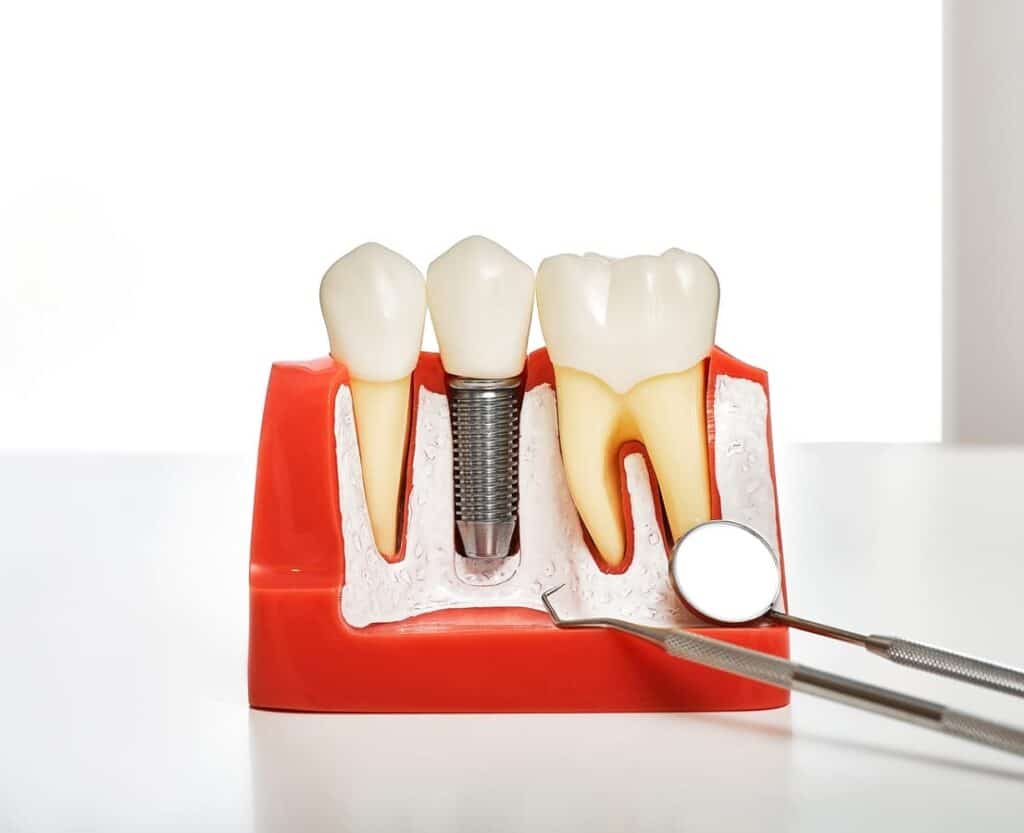
Dental implants are titanium posts surgically placed into your jawbone. They act as artificial tooth roots. A crown is attached on top, creating a result that looks and functions like a natural tooth.
Dentures are removable appliances that replace multiple missing teeth at once. Full dentures replace an entire arch of teeth. Partial dentures fill in gaps when some natural teeth remain. Both types rest on your gums and are taken out for cleaning.
Bridges are a third option worth mentioning. A dental bridge anchors to neighboring teeth and fills a gap without surgery. It’s a fixed restoration — meaning it stays in your mouth — but it requires altering healthy adjacent teeth.
- Dental implants: Surgically placed, permanent, bone-preserving
- Dentures: Removable, non-surgical, replace multiple teeth at once
- Bridges: Fixed, no surgery, but alters neighboring teeth
Dental Implants vs Dentures: Comparing Comfort and Daily Life
Comfort is one of the biggest factors patients in Whitehall ask about. Dental implants feel closest to natural teeth. They don’t shift, slip, or require adhesive. You eat, speak, and laugh without worrying about movement.
Dentures can feel bulky at first. Many patients adjust well over time. However, traditional dentures may loosen as your jawbone gradually changes shape. This is because tooth roots normally stimulate the bone — and without them, bone slowly resorbs.
Implants prevent that bone loss entirely. The titanium post mimics a natural root and keeps your jawbone stimulated. This also preserves your facial structure over the long term.
Dentures, on the other hand, offer a faster path to a complete smile. They require no surgery and no healing time. For patients who need a quicker or less invasive solution, dentures remain a strong choice.
Who Is a Good Candidate for Each Option?
Not everyone qualifies for dental implants right away. Implants require adequate jawbone density to support the post. Patients who have experienced significant bone loss may need a bone graft first. Overall health also matters — conditions like uncontrolled diabetes can affect healing.
Good implant candidates typically share these traits:
- Healthy gums with no active periodontal disease
- Sufficient jawbone density or willingness to undergo grafting
- Non-smokers or patients willing to quit during healing
- Commitment to consistent oral hygiene and follow-up care
Dentures are often the right fit for patients who are not surgical candidates. They also work well for those replacing a full arch of teeth. Patients who prefer a non-invasive process often choose dentures for that reason alone.
Dr. Brunworth evaluates each patient individually. A thorough exam and X-rays help determine which option safely meets your needs.
Long-Term Investment: What Each Option Costs You Over Time
Dental implants typically involve a higher upfront investment. The surgical process, healing period, and custom crown all contribute to the total cost. However, implants are designed to last a lifetime with proper care. Many patients find they require very little maintenance beyond routine checkups and daily brushing.
Dentures cost less initially. But they do require replacement every five to ten years as your jaw changes shape. Adhesives, cleaning solutions, and periodic relines add up over time. When you factor in long-term expenses, the gap between implants and dentures narrows considerably.
Bridges fall somewhere in between. They typically last ten to fifteen years before replacement becomes necessary. Keep in mind that bridgework involves reshaping the teeth on either side of the gap — a permanent change to healthy tooth structure.
Thinking long-term helps you see the full picture. Dr. Brunworth can walk you through realistic cost expectations during your consultation at our Whitehall office.
Making the Right Choice for Your Lifestyle in Whitehall
Your lifestyle plays a huge role in this decision. Active individuals often prefer implants because they function without restriction. You can eat corn on the cob, apples, and chewy foods without concern. There are no dietary limitations and nothing to remove at night.
Patients who travel frequently or manage complex health conditions sometimes prefer the simplicity of dentures. They’re easy to repair if damaged and don’t involve surgical recovery. For older adults or those with health considerations, dentures offer a practical, proven solution.
Implant-supported dentures offer a middle ground worth exploring. These use a small number of implants to anchor a denture securely. You get improved stability without replacing every tooth individually. Many Whitehall patients find this hybrid approach ideal.
There’s no universally right answer here. The best choice depends on your oral health, your goals, your health history, and how you live your daily life. That’s exactly why a one-on-one conversation with Dr. Brunworth is so valuable.
Conclusion: Take the Next Step Toward Your Best Smile
When weighing dental implants vs dentures to find which choice fits your life in Whitehall, the most important step is getting personalized guidance. Reading about options gives you a foundation. But your mouth, health, and lifestyle are unique. A professional evaluation gives you clarity that no article can replace.
At Lakeshore Family Dental Care, Dr. Brunworth takes time to understand your situation before recommending anything. The goal is always to help you make a confident, well-informed decision — not to push a particular treatment. Whether implants, dentures, or a bridge turns out to be the right fit, you’ll leave your consultation with a clear path forward. Book Now to schedule your appointment with our team.
Frequently Asked Questions
How long do dental implants last compared to dentures?
Dental implants are designed to last a lifetime with proper care and regular dental checkups. Dentures typically need to be replaced every five to ten years as the shape of your jaw changes over time. When maintained well, implants offer a more permanent long-term solution.
Can I get dental implants if I’ve been wearing dentures for years?
Possibly, but long-term denture wear often leads to jawbone loss. Dr. Brunworth would evaluate your bone density through X-rays during a consultation. If bone loss is significant, a bone grafting procedure may be needed before implant placement can proceed safely.
Are dentures uncomfortable to wear every day?
Many patients adjust to dentures within a few weeks and find them comfortable for daily use. Some patients experience minor soreness or slipping initially. Proper fitting and follow-up adjustments with Dr. Brunworth help ensure your dentures feel as comfortable as possible.
What is the recovery time for dental implant surgery?
Most patients return to normal activities within a few days after implant surgery. Full healing and osseointegration — the process of the implant fusing with the jawbone — takes several months. During this time, Dr. Brunworth monitors your progress at scheduled follow-up visits.
Are implant-supported dentures a good middle-ground option?
Yes, implant-supported dentures combine the stability of implants with the coverage of dentures. They use a few strategically placed implants to anchor the denture securely. Many patients in Whitehall find this option provides significantly better comfort and confidence than traditional removable dentures.